The Quiet Work of Finding Peace: Willem’s History
Willem was born on November 29, 1941, in Bogor (then part of the Dutch East Indies), eight days before the attack on Pearl Harbor. Eight months later, in August 1942, Japanese troops invaded Indonesia and rounded up Europeans. Willem, an infant, was taken with his mother and older brother to a camp. His father, a rice breeder for the Dutch government, was sent to the hard-labor camp for men and forced to work on the Burma railroad and Japanese coal mines.
As he recalled his family’s history in Indonesia, Willem did little to hide his pain, “The Japanese army was barbaric, comparable to the Nazis. I was in at least two different internment camps. We called them concentration camps. Punishments were collective and cruel. Women were forced to kneel on sharp bamboo edges for hours, prisoners were put in rattan baskets and thrown into sea, some were subjected to water torture. They starved people to death in these camps.” What little Willem recalled came in pieces, from others who had been there. “My mother was very stubborn,” Willem said. “She didn’t care what happened. I don’t know what they did to her. She never talked about it.”
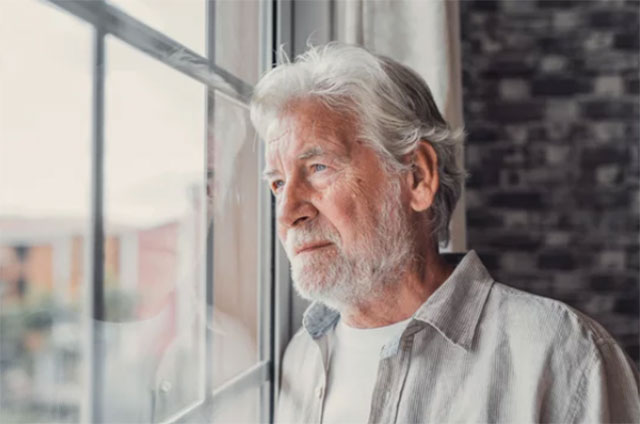
Willem was four and a half when he and his family were set free. The family was reunited through a relative working for the Red Cross. But in the war-ravaged country, peace did not return to the family.
On his fifth birthday, Willem’s parents invited friends to their home in Sulawesi. When the guests left in haste, their neighbor—a Dutch army sergeant offered to deliver the guest’s forgotten spare wheel. The sergeant loaded the wheel, Willem, and his older brother into his jeep and raced after the guest’s car.
It was the Bersiap period, when armed local militias (called pemuda), roamed the city outskirts, attacking European civilians and Dutch soldiers. Somewhere beyond the city limits, the jeep overturned. As the sergeant bent over the engine to inspect the damage, a militia fighter approached from behind and stabbed him. Meanwhile, Willem’s brother, thrown from the jeep, lay by the road with a fractured skull. A military convoy discovered them by the road and drove them towards the city hospital, but the potholed road worsened the bleeding and Willem’s older brother died two days later.
Willem’s family moved across continents, from Sulawesi to Holland, to Surinam, and then to the US, following work and a fractured history of survival and pain. His parents, like many survivors, never spoke about the horrors of camp life or the effects of the violent wars on their lives. “They didn’t talk,” he reminisced. “That generation didn’t. But it helps to know.”
Willem’s parents eventually separated. His father later moved to California to work at a rice experimental station north of Sacramento, part of the University of California system. Willem joined him in 1961, nineteen years old and still searching for a place to land.
He went on to serve in the U.S. Army, swim competitively, play water polo, marry, divorce, raise two daughters, and retire. “You keep going,” he said.
Decades later, a solitary, retired life led Willem to a community program serving the elderly near his home in Kirkland. His Indian neighbors invited him to try chair yoga at their temple. “I did that for fifteen years,” he said. “Every Sunday at seven. But when Covid came, it stopped.”
Eventually Willem found the IACS seniors’ program where I met him: yoga, lunch, and a room filled with familiar noise.
“What do you enjoy most?” I asked.
“The yoga and setting up the chairs and tables here. After yoga, we put the tables back up for lunch. If you start at the wrong end, it jams the pathway. So, I start in the corner. Then I tell people, ‘Move, move, move.”
He laughed, but the routine matters. Show up. Help others. Share a meal. Go home less alone.
Over ten years he has watched the IACS elderly program grow. He remarks, “More people come now…sometimes 150, sometimes 175 people share this lunch hall. Mothers and children join for lunch. Volunteers change; teachers rotate.” However, what does not change is what the place offers Willem—a reason to leave his apartment, find meaning and community.
I asked him why he liked helping with the chairs and table. Willem noted, “I help because I get a lot out of it. Everyone here knows me. Names I might forget, but I remember the faces. I come here every Thursday at ten. I get my token. I start with setting the tables in the corner.”
Listen closely and you hear what the program truly offers. It is not only yoga and lunch. It is dignity in routine, usefulness restored, a space where memory can breathe.